


Commitment FoLU Net Sink 2030
GCF REDD+ Results-Based Payments (RBP) Project
The success of the REDD+ program in Indonesia and the receipt of Results-Based Payments (RBP) reflect the effective and credible implementation of the REDD+ scheme. The payment of USD 103.78 million was not merely a financial outcome, but a global recognition of Indonesia’s ability to deliver real and measurable emission reductions. At the same time, it underscores the program’s broader impact in advancing sustainable forest management, strengthening safeguards, and ensuring inclusiveness through the promotion of gender equality and the meaningful involvement of Indigenous Peoples (Masyarakat Hukum Adat/MHA).
Beneficiaries
Program Beneficiaries
Government Institution
Civil Society Organization
Private Sector
Research/ Education Ins.
Community Group
Menuju Indonesia Rendah Emisi melalui Program REDD+
Indonesia memiliki peran strategis dalam upaya global menurunkan emisi gas rumah kaca, khususnya melalui sektor kehutanan dan penggunaan lahan (Forestry and Other Land Use/FOLU). Sebagai negara dengan kawasan hutan tropis yang luas, Indonesia berkomitmen untuk menjaga kelestarian hutan sekaligus meningkatkan kesejahteraan masyarakat melalui implementasi REDD+ (Reducing Emissions from Deforestation and Forest Degradation).
Program REDD+ di Indonesia dipimpin oleh Kementerian Kehutanan, dengan dukungan dan kerja sama erat dari Kementerian Lingkungan Hidup, Badan Pengelola Dana Lingkungan Hidup (BPDLH), serta mitra pembangunan seperti UNDP. Kolaborasi multipihak ini menjadi kunci dalam memastikan pendekatan yang terintegrasi, transparan, dan berkelanjutan.
Pendekatan Terpadu untuk Dampak Nyata
Program REDD+ di Indonesia mengedepankan pendekatan menyeluruh yang mencakup:
- Penguatan kebijakan dan tata kelola kehutanan untuk memastikan implementasi REDD+ yang efektif dan akuntabel.
- Pengembangan sistem pengukuran, pelaporan, dan verifikasi (MRV) yang andal untuk memastikan integritas pengurangan emisi.
- Penerapan safeguards sosial dan lingkungan guna menjamin manfaat yang adil, inklusif, dan berkelanjutan, khususnya bagi masyarakat lokal dan masyarakat adat.
- Pengelolaan pembiayaan berbasis hasil (results-based payments) melalui BPDLH untuk memastikan insentif yang tepat bagi kinerja penurunan emisi.
Dampak bagi Lingkungan dan Masyarakat
Melalui implementasi REDD+, Indonesia tidak hanya menurunkan emisi gas rumah kaca, tetapi juga:
- Melindungi keanekaragaman hayati.
- Meningkatkan kualitas tata kelola hutan dan lahan.
- Mendorong pengembangan mata pencaharian berkelanjutan bagi masyarakat.
- Memastikan distribusi manfaat yang adil dan transparan.
Kemitraan untuk Transformasi
Melalui kemitraan antara Pemerintah Indonesia dan UNDP, implementasi GCF REDD+ RBP periode 2014-2016 yang dilaksanakan pada tahun 2021-2025 tidak hanya memperkuat kapasitas nasional, tetapi juga mendorong inovasi dalam pembiayaan iklim. Dukungan teknis dan kelembagaan yang diberikan memastikan keselarasan dengan standar nasional dan internasional, serta memperkuat posisi Indonesia dalam agenda perubahan iklim global.
Menuju FOLU Net Sink 2030
REDD+ menjadi pilar kunci dalam pencapaian target FOLU Net Sink 2030, di mana sektor kehutanan diharapkan mampu menyerap emisi lebih besar daripada yang dihasilkan. Program ini berkontribusi langsung terhadap pencapaian Nationally Determined Contribution (NDC) Indonesia, sekaligus mendorong transformasi menuju pembangunan rendah karbon yang inklusif dan berkelanjutan.
Bersama, kita menjaga hutan Indonesia sebagai aset strategis bangsa untuk iklim global, kesejahteraan masyarakat,
dan masa depan yang lebih hijau serta berkelanjutan.
Timeline
Timeline
Understanding the journey of REDD+ Results-Based Payments achievements
Coordination and Implementation
Coordination and Implementation of REDD+ Architecture
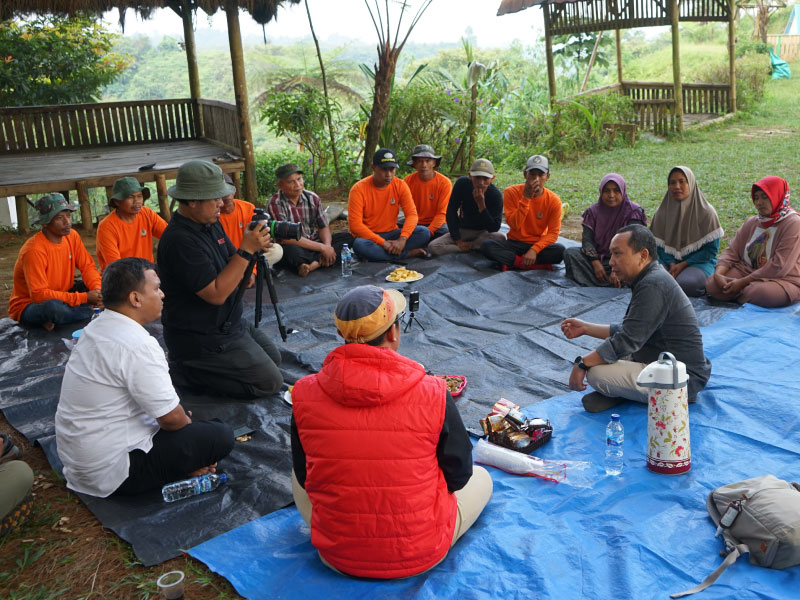
Stakeholder Engagement
Stakeholder Engagement is a vital component, requiring the involvement of diverse groups, including government entities, the private sector, academic institutions, local communities, and Indigenous Peoples groups. This comprehensive approach is necessary to ensure fair and transparent benefit sharing mechanisms and guarantee gender inclusion across all REDD+ initiatives.
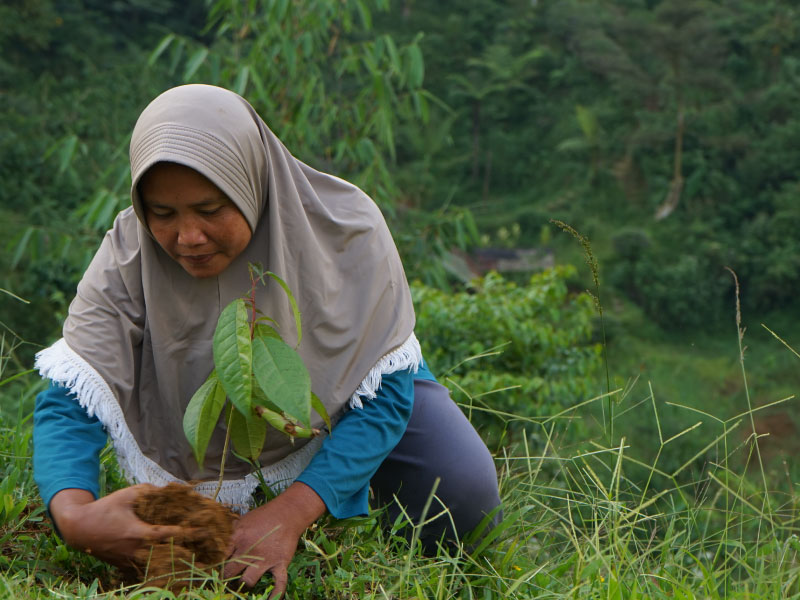
Developing and Strengthening REDD+ Architecture
The core objective of this initiative is to establish the fundamental structural and governance mechanisms required for effective climate mitigation. This involves building essential technical foundations, such as the Forest Reference Emission Level (FREL/FRL) and the National Forest Management System (NFMS). Furthermore, the initiative is dedicated to developing robust transparency frameworks, including the rigorous Measurement, Reporting, and Verification (MRV) mechanism and the National Registry System for Climate Change Control (SRN PPI). Finally, the REDD+ Safeguard Information System (SIS REDD+) ensures that all program activities are executed in compliance with environmental and social protection standards.
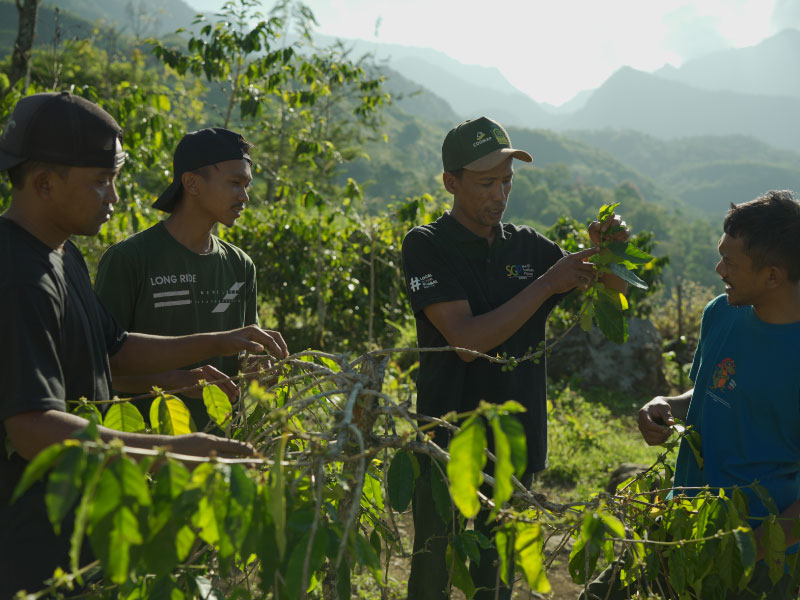
REDD+ Implementation Management
The overall goal of REDD+ Implementation Management is multifaceted. It focuses on enhancing REDD+'s contribution toward achieving the Nationally Determined Contribution (NDC) while simultaneously aligning with the implementation of the Carbon Economic Value (CEV) scheme. Furthermore, the management seeks to realize synergy between the three Rio Conventions: the UNFCCC (Climate Change), the UNCCD (Desertification), and the CBD (Biological Diversity). Critically, these efforts are complemented by actions aimed at strengthening community livelihoods for populations both in and around the forest areas.
Paradigm Shift in the Context of the New Normal
The implementation strategy emphasizes adaptation and innovation, which includes the dedicated development and deployment of advanced forest monitoring technology. This approach ensures that the program remains in alignment with national policies concerning climate change and sustainable development goals.
Project Achievement
Progress on Sustainable Forest Management
23 provinces are implementing the program; 3 provinces' funding proposals are under review
Direct Distribution Achievement (National)
Climate Change Adaptation
4,477 ProKlim Locations Registered (28% of national target), 60 Appreciation Supports Awarded, NDC Support for the Waste Sector: Support for studies and meetings on waste management to contribute to the Nationally Determined Contribution (NDC) targets.
Forest and Land Fire Control
13 Locations (Formation/Development of Community Fire Care Groups (MPA)),
3 Locations (Capacity building and competency certification for MPA),
13 Locations (Technical guidance facilitated for calculating the area of burnt land),
5 Locations (MPA empowerment)
REDD+ Architecture Support
Strengthening National and Sub-national REDD+ Architecture, Strengthening Governance of Climate Change Resource Support, NFMS/Simmontana (National Forest Monitoring System / Simmontana), Operationalization of the SRN within the REDD+ Scheme (System of National Registry), Strengthening National GHG MRV (Greenhouse Gas Monitoring, Reporting, and Verification)
Indirect Distribution Achievement (Sub National)
24 Province
Implementation of the GCF Output 2 RBP program across 24 provinces.
19 ProKlim
Recorded Climate Village Program (ProKlim) locations.
131
Forest Security Patrols
10 MPA
Formation of Community Fire Care Groups (Masyarakat Peduli Api).
140 Trainings
Including Smart Patrol, conflict management, carbon accounting, and GHG inventory.
1,749
Plantings/Reforestation activities.
16 RPHJP
Approved Long-Term Forest Management Plans.
150 RKPS
Assistance for Social Forestry work plans.
15 Books/Publications
Covering Forest Resource Balance (SDH), GHG Inventory (IGRK), mitigation mechanisms & forest/land fire (Karhutla) management, NFMS, etc.
16 Socializations/Workshops & Reports.
16 Socializations/Workshops & Reports.
Program Map
Implementation Status
Select province and implementation status to view data on the map.
Category
Select province and category to view program interventions on the map.
Video
Video Gallery
Safeguard
Safeguard
REDD+ has a safeguards framework that serves as a guide for implementing countries. Safeguards are a safety framework to ensure that REDD+ implementation protects the environment and brings fair benefits to society, while maximizing social, environmental, and governance benefits.
By utilizing certain procedures and approaches, Safeguards aims to keep the society and environment protected. The implementation of REDD+ in Indonesia prioritizes environmental protection, community well-being, and inclusivity to ensure that REDD can protect the environment and provide fair benefits to all groups, including vulnerable populations such as women, people with disabilities, youth, the poor, and other marginalized groups.
The Cancun Safeguards Principles guiding REDD+ activities include:

Consistency with National Forest Programs
Compliance and legal consistency with national forest programs and relevant international conventions and agreements.

Transparency and Effectiveness of Governance
Transparent and effective national forest governance structures.

Respect for Rights
Respect for the knowledge and rights of Indigenous Peoples and local communities.

Effective Stakeholder Participation
Full and effective participation of relevant stakeholders, in particular Indigenous Peoples and local communities.

Biodiversity and Ecosystem Services
Actions to conserve biodiversity and enhance social and environmental benefits, including forest ecosystem services.

Reduction of Reversal Risks
Measures to address the risks of reversals (non-permanence) of benefits.
Reduction of Displacement of Emissions
Measures to reduce the displacement of emissions (leakage).
Information regarding safeguard fulfillment will be communicated through REDD+ Safeguard Information System (SIS-REDD+) by REDD+ implementing parties at the sub-national level to the SIS REDD+ management body at the national level to maintain transparency and accountability.

Compliance with the regulations and accountabilities

Labor and working conditions
Resources efficiency and commitment to protecting environmental quality

Community health and safety

Resettlement plan and restriction on land use

Biodiversity conservation & sustainable management of living natural resources

The protection and participation/engagement of indigenous people

The protection of cultural heritage

The environmental and social commitment of financial intermediaries

Stakeholder engagement and information disclosure

Emission risks or potential carbon leakage

Community social quality, gender equality, & empowerment of vulnerable groups
South-South Exchange
South-South Exchange
The South-South Exchange (SSE) event is a key opportunity for tropical forest countries to share experiences and learn from each other on how to successfully implement REDD+. As countries move through different stages of REDD+, from preparation to implementation and receiving results-based payments (RBPs), this event allows them to exchange ideas and strategies to reduce emissions in the Forest and Other Land Use (FOLU) sector.
Hosted by Indonesia, which has been a leader in REDD+ efforts, the event showcased how countries access RBPs from the Green Climate Fund (GCF) and reinvest it to strengthen their forest management efforts. The funds, which come from the Green Climate Fund (GCF), are important for supporting Nationally Determined Contributions (NDCs), particularly in the Forestry and Other Land Use (FOLU) sector.
Based on South-South cooperation, this exchange encouraged countries to work together, shared best practices, and built partnerships that support global climate action and sustainable forest management. The South-south Exchange provided an opportunity to bring together key stakeholders for open discussions about the opportunities and challenges of securing and reinvesting REDD+ Results-Based Payments (RBP).
Voices from the Field
View All